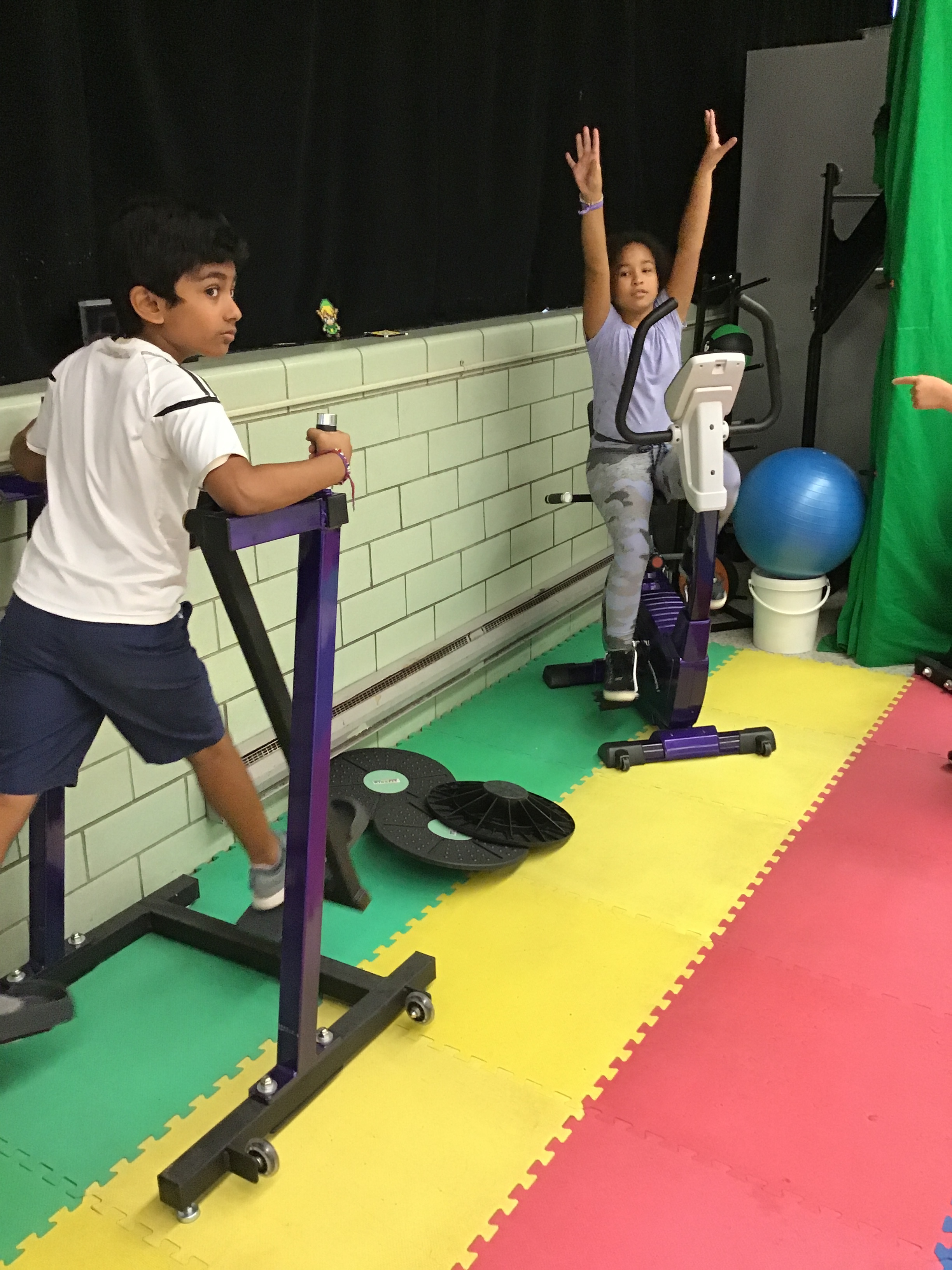
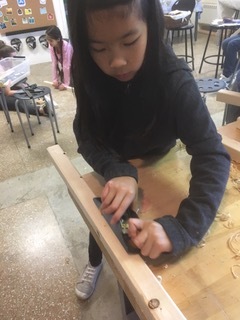
// Photos from the last week in November //


Creating the future, without fear.
On Monday and throughout the week, we have enjoyed meeting with parents for Family Conferences. Students have done a beautiful job assembling their work and explaining what they have accomplished so far this semester and their goals for the year. In Math, fourth-level students worked on a Collaborative Math activity in which they estimated the number of people (or birds) in a photograph without counting. They presented their strategies and estimates to our class. The fifth-level students worked on placing decimals on a number line to compare place value and scale. In History, students learned about religion and agriculture in Mesopotamia. In Science, students learned about the processes of weathering, erosion, and deposition.


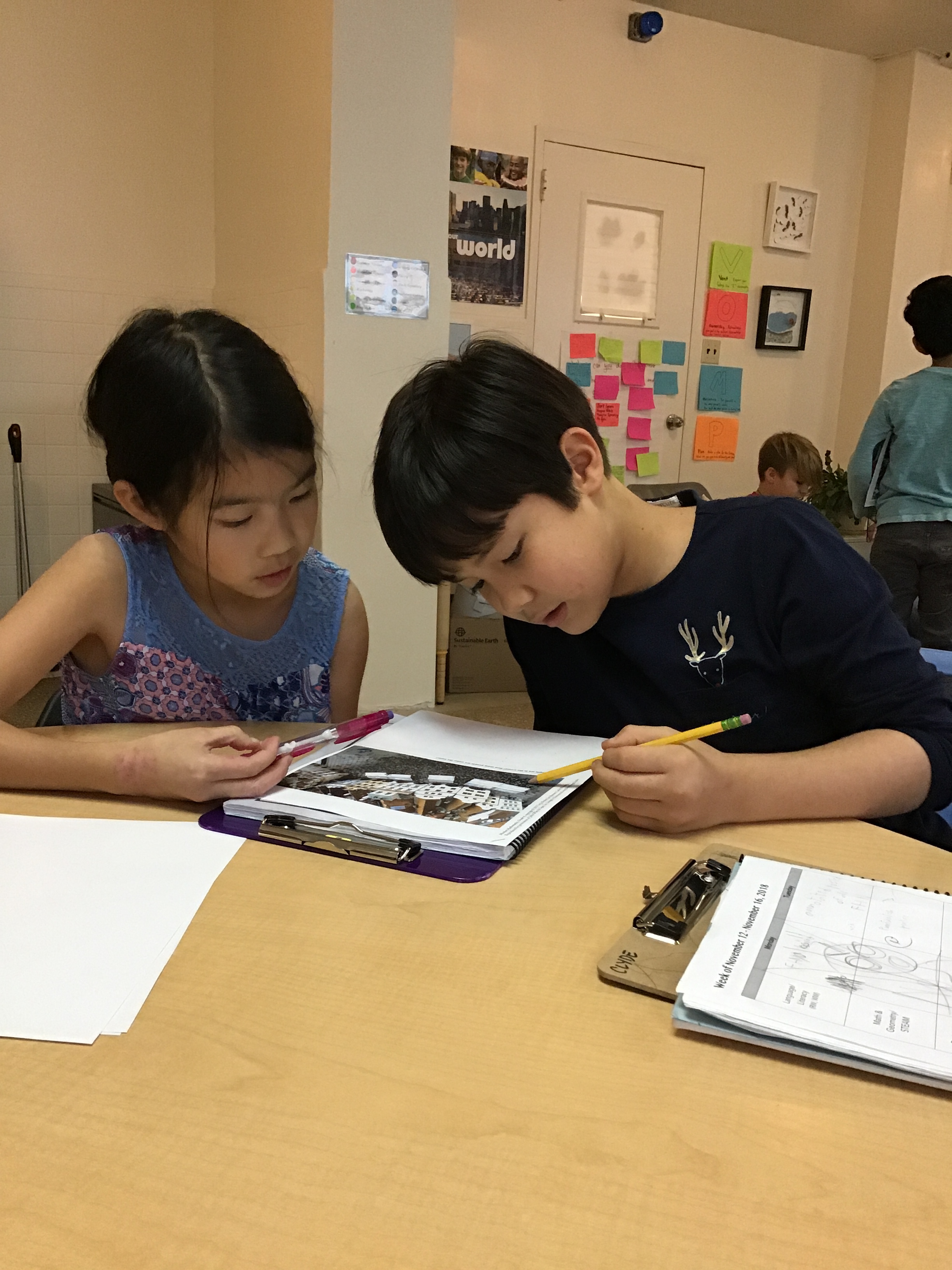


Students have been participating in experiments that show how features of a river form using a Stream Table in Science. They have taken time to observe changes to the stream and the surrounding land due to external forces, such as changes in elevation or the addition of water. In History, students reviewed the fundamental needs of humans and applied these concepts to what they know about civilizations and the systems humans devise in order to meet their needs. Students continue to grow ideas for their Memoir writings in Writers’ Workshop. Their focus this week was to look for underlying themes in their seed ideas with the help of a partner. In Readers’ Workshop, students have been sharing their thoughts about character development and predictions about how the plot will take shape in The Westing Game.


During our Curriculum Day presentation, we shared information on what the Upper Elementary years are like for our children socially, emotionally, physically and academically. Here’s a great presentation by Chip Wood outlining these phases year by year.

This week, students furthered their knowledge about the geography of the ancient civilization of Mesopotamia. In Science, students chose a river to study and find out more about. Students found out major features of the river, the places through which it runs, and the flora and fauna that thrive in and around the river. Some examples are the Nile River, the Congo River, and the Ohio River.
In Language, students learned about onomatopoeia, and used this literary device to incorporate into a “spooky story.” They had an opportunity to read their stories to the class, together with Perseus Room, and listen to some other “scary” stories, including one about New York. In Writers’ Workshop, students have begun collecting ideas for a memoir story, and are looking out for themes or the deeper underlying importance of the story they wish to tell.


We had our first field trip this week to MoMath, the National Museum of Mathematics. Students participated in a workshop about code-cracking, and had a chance to explore the museum’s permanent exhibitions. In class, they have begun learning about ancient Mesopotamia and why people settled in the area between the Tigris and Euphrates Rivers. Students have been able to apply what they know about rivers from their Science lessons to deepen their understanding of ancient civilizations. In Writers’ Workshop, we‘ve begun a new unit about Memoir. During the week, students read samples of memoirs in the form of essays and short stories in order to get a feel for the genre, and to start thinking about what story they would like to write about their own lives in the upcoming weeks.


This week, students learned about author’s purpose in historical writing. They also studied the “Building Blocks of Civilization,” and saw the evolution of human civilization as depicted on a familiar Montessori material from Early Childhood, the Pink Tower. Students read through chapters of our Readers’ Workshop book, The Westing Game, and looked more closely at events within the first few chapters while pinpointing new vocabulary in context. In Collaborative Math, students took turns enacting the role of “convincer” and “skeptic” as they folded sheets of paper and either defended that they had successfully created a given shape or challenged their partner. This is part of a larger, year-long conversation about communicating our ideas to one another in Math, and every subject area.


Students have begun dissecting the parts of a mystery novel through the classic fiction work, The Westing Game. In History, students are coming up with their own interpretations for “mysterious artifacts” by asking the question, How would objects in our everyday life be interpreted by future generations? They have also started a new unit in Science around the River, and have made connections to rivers in literature, including non-fiction writing and poetry. Lastly, students are learning a new process for conflict-resolution as part of our social curriculum, and will try it out with a friend during the week.


This week, students studied the origins of Writing, Numbers, and Language in their History work. Students chose to study the timeline of events of one of these topics. They read various sources and compiled new information in a writing piece—students then created a small visual piece to accompany their writing. Students also had a History lesson about how archaeologists interpret artifacts and make their own educated guesses about what they were used for. They will explore a book called “The Motel of Mysteries,” where future archaeologists make comedic, erroneous guesses about how we use common objects. In Readers’ Workshop, students began a unit on mysteries and are learning the aspects of this genre.